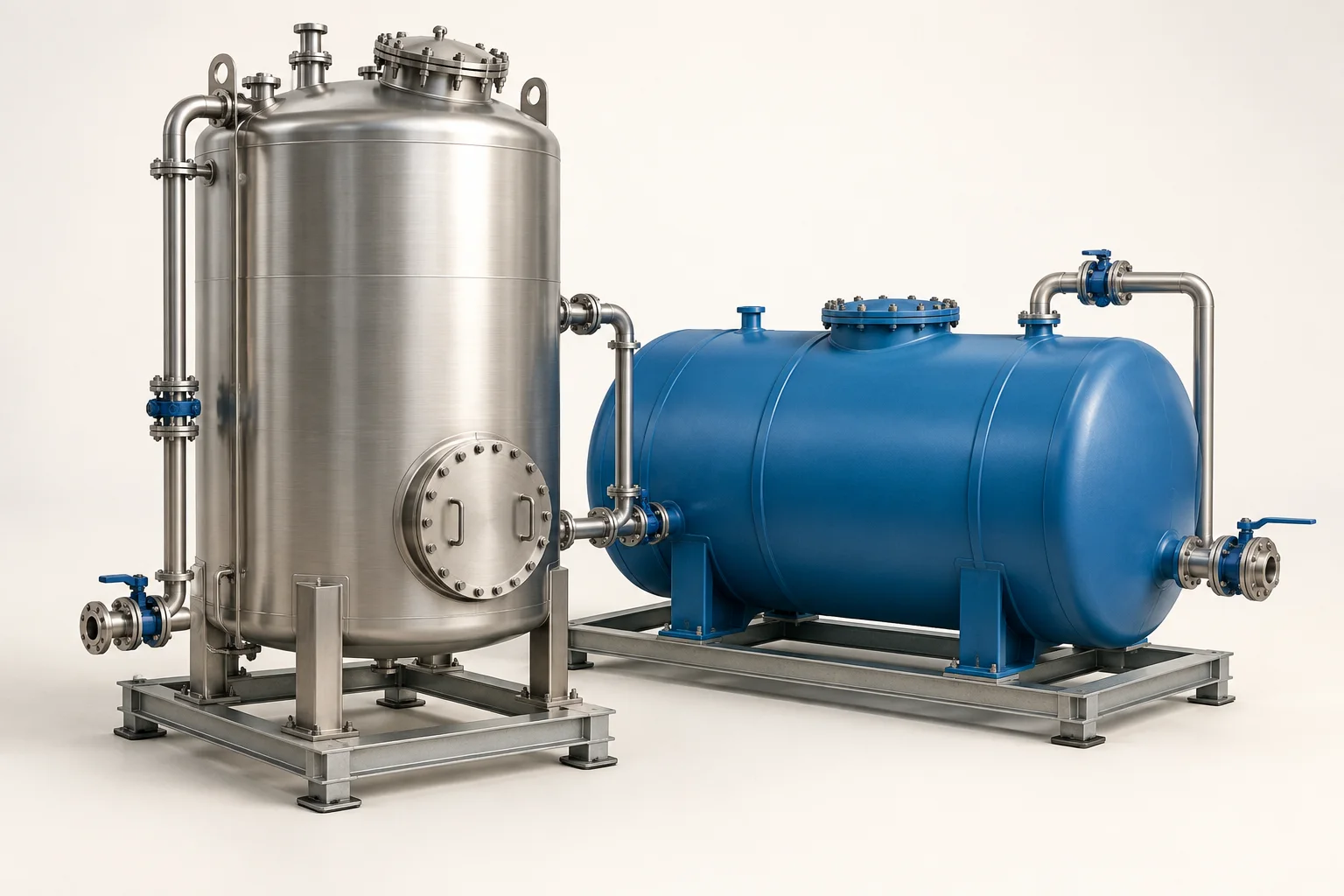
 3D concept / project-specific configuration
Storage & equalisation tanks
Raw water, treated water, wastewater buffering and project-specific reserve storage.
Water treatment, wastewater treatment and reuse — from source analysis and process design to equipment supply, installation and commissioning.
Discuss your water project Water Treatment Equipment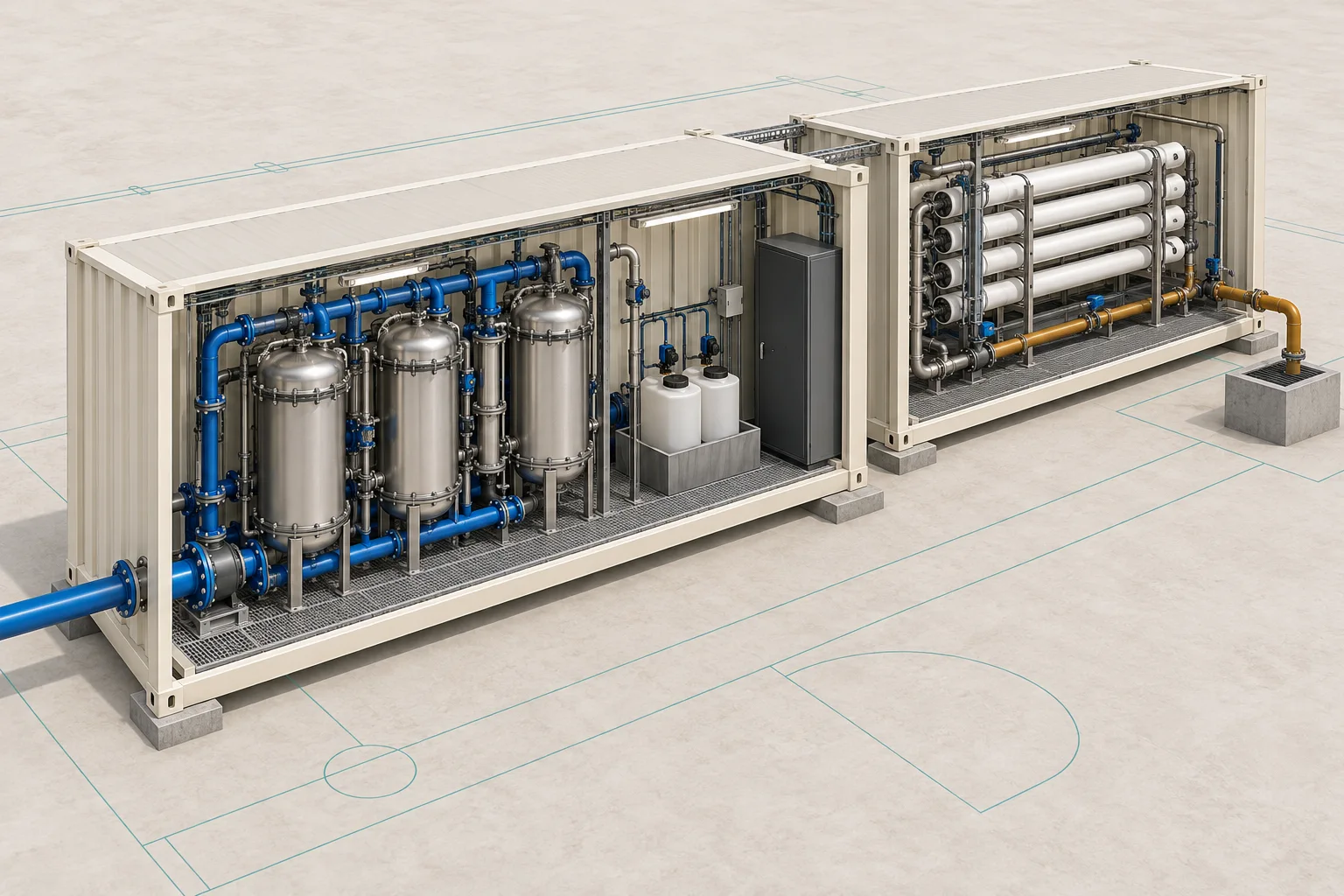
One treatment train cannot serve every source. We assess influent quality, flow variation, the required outlet quality and the operating conditions before selecting equipment.
Source assessment, clarification and filtration, with membrane treatment and disinfection selected against the required water quality. Mobile and containerised layouts for remote sites.
Design inputs: Source-water analysis, seasonal variation, daily demand and the intended use of the treated water.
Screening, flow equalisation, biological treatment, clarification, polishing and disinfection where required. Include sludge treatment and an operating plan.
Design inputs: Average and peak flow, organic and nutrient loads, temperature, discharge destination and available land.
Separate incompatible streams first. Assess physical-chemical pretreatment, flotation, biological treatment and polishing against the actual contaminants and reuse objective.
Design inputs: Production processes, cleaning cycles, COD/BOD, suspended solids, fats, oils, salinity and inhibitory substances.
Sediment separation, oil separation and sorption polishing where appropriate. Size storage and treatment for the catchment, rainfall and discharge requirements.
Design inputs: Catchment area, rainfall data, oil and solids loading, peak flow and maintenance access.
A staged treatment concept combining pretreatment and selected membrane or other polishing processes. Concentrate, sludge and residuals management are part of the solution.
Design inputs: Leachate age and seasonal composition, ammonia, COD, salinity, flow variability and an authorised residuals destination.
Sludge, filter backwash and membrane concentrate require their own handling routes. Reuse or discharge suitability is verified against the project’s applicable requirements and laboratory results.
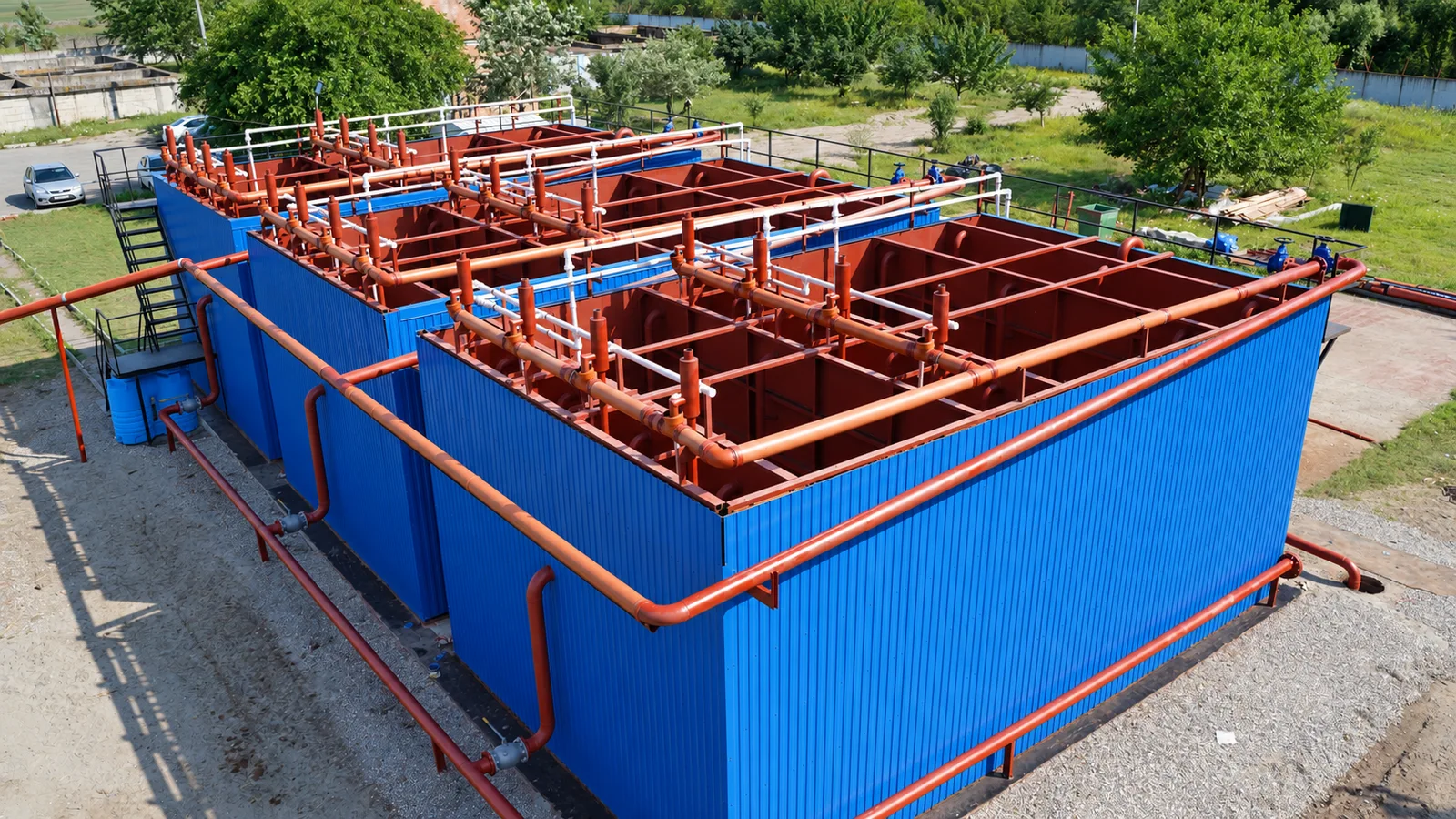
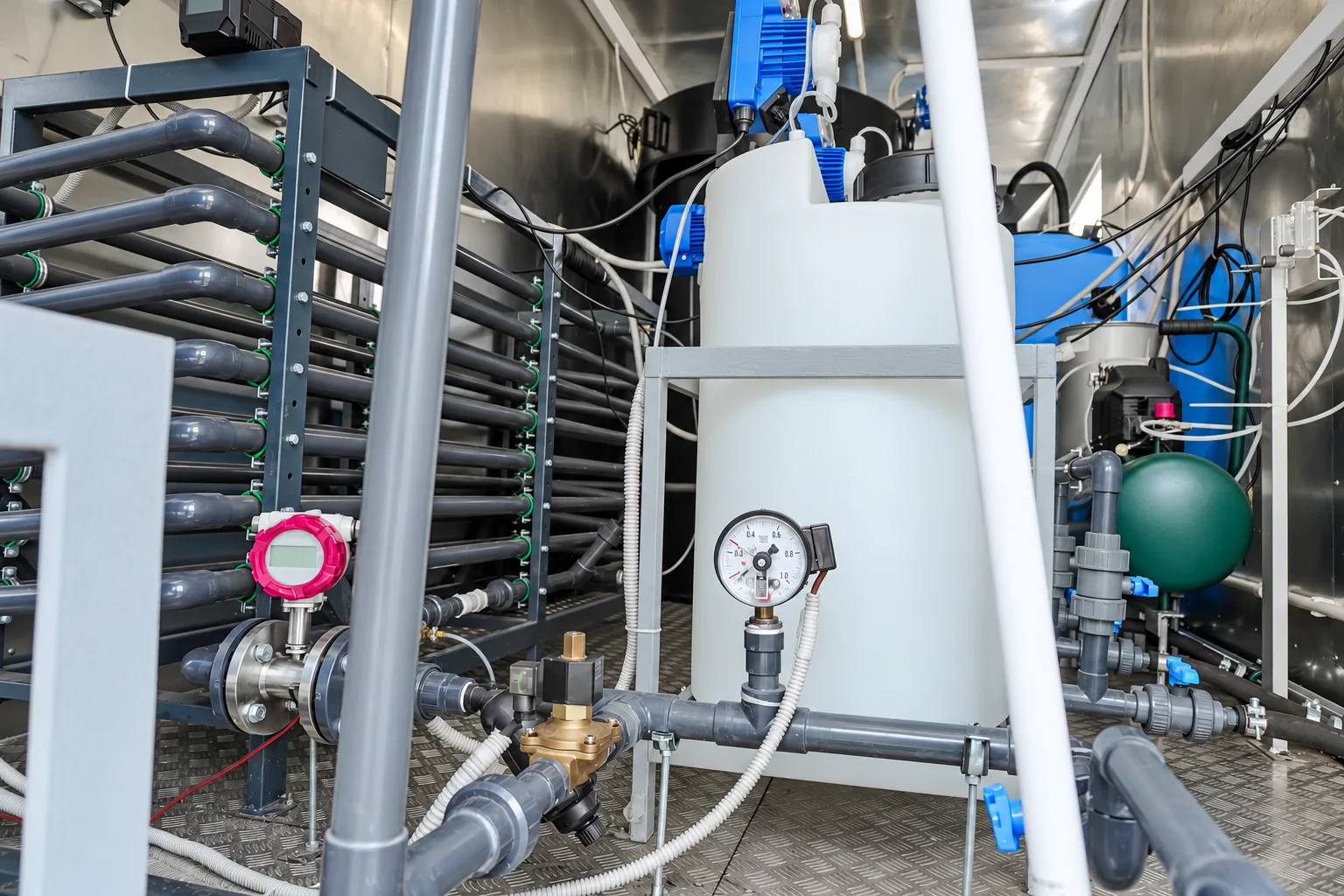
A closer look at treatment modules, process equipment and site installations.
3D concept / project-specific configurationRaw water, treated water, wastewater buffering and project-specific reserve storage.
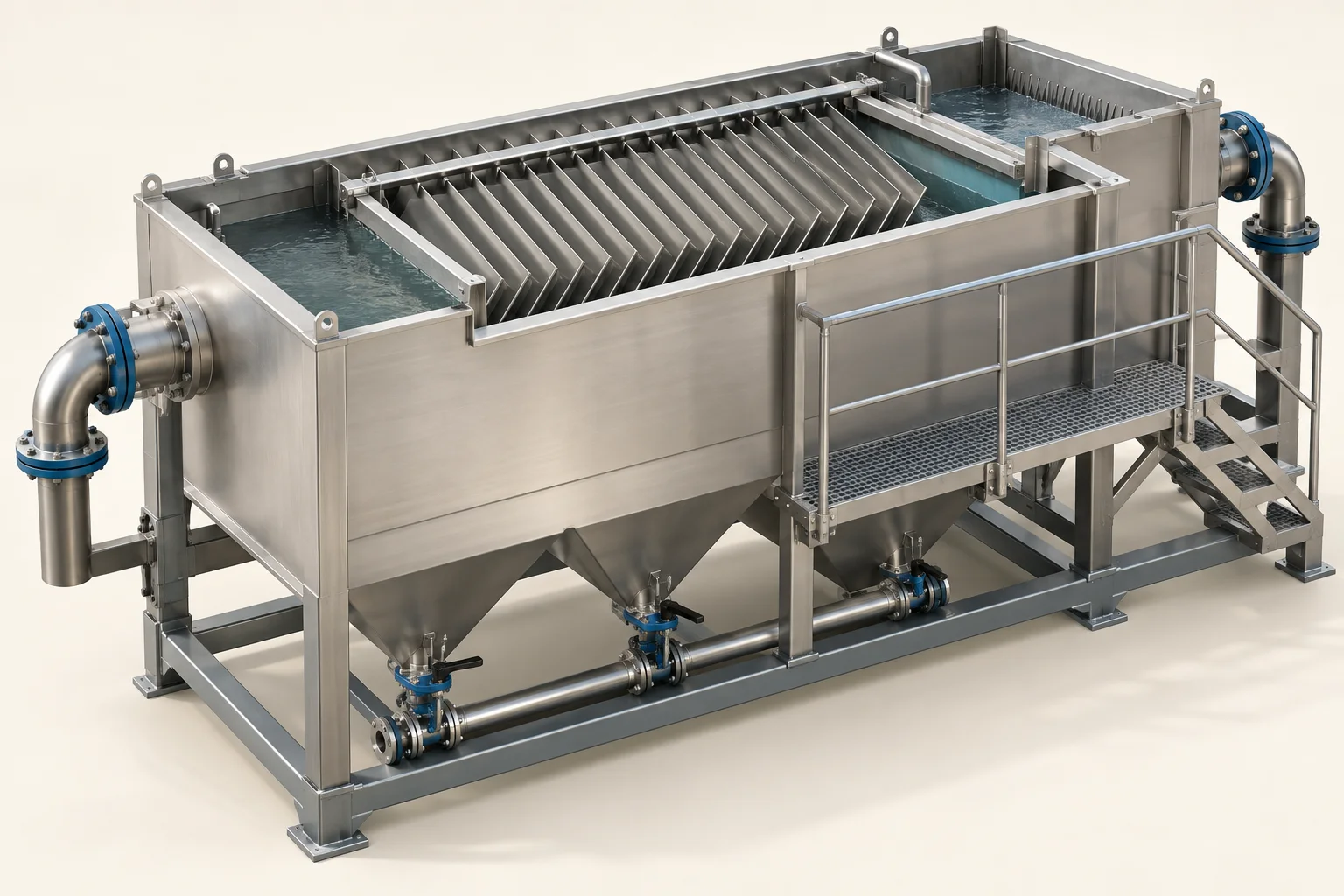 3D concept / project-specific configuration
Grit separators, combined oil/sediment separators, grease traps and lamella settlers.
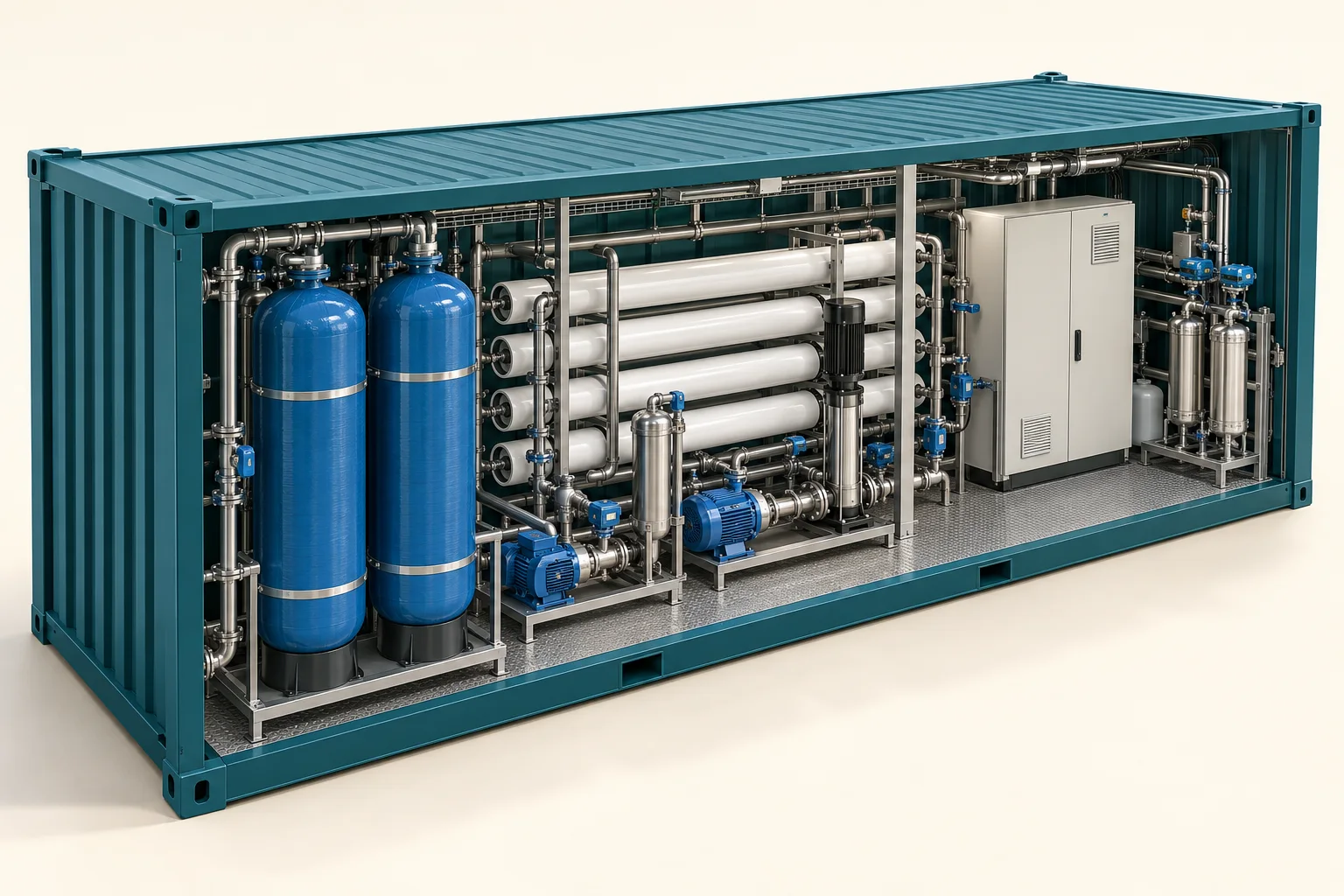 3D concept / project-specific configuration
Biological treatment, flotation and filtration modules, selected membrane systems and mobile water treatment.
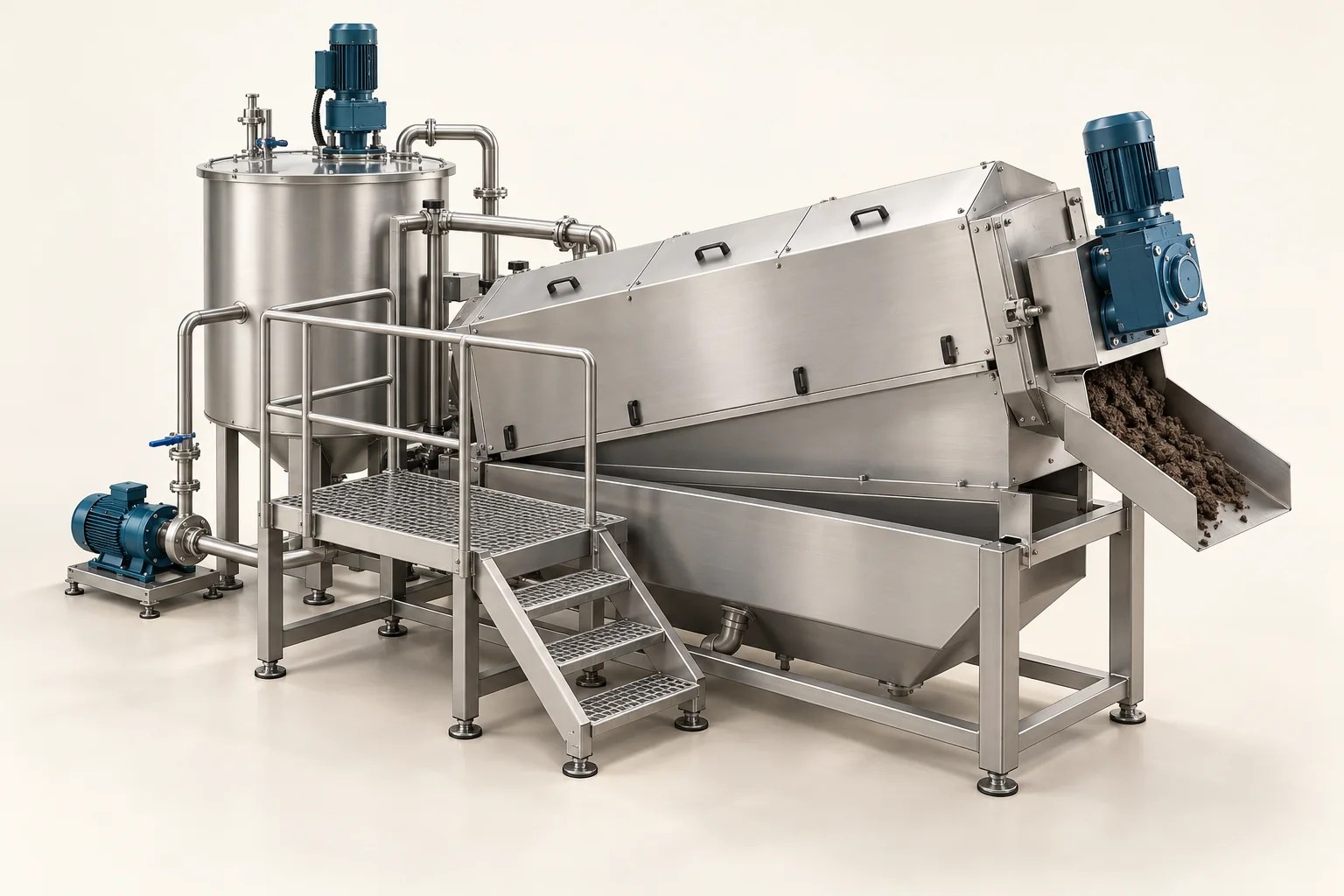 3D concept / project-specific configuration
Drum screens, mechanical bar screens and screw sludge dewatering units.
Equipment can be supplied separately or integrated into an engineered system. Materials, capacity, redundancy and scope are selected for the site. Pricing follows a confirmed technical brief.
Not on the basis of a generic treatment diagram. Intended reuse, source risks, treatment barriers, monitoring and the applicable drinking-water requirements must be assessed for the specific project.
Capacity is only one input. Water analysis, outlet targets, location, civil works, energy supply and residuals management determine the scope and cost.
Yes. An audit should establish the hydraulic and pollutant loads, equipment condition, bottlenecks and operating constraints before developing a phased upgrade.
A conversation about your site, scope and priorities. Get a preliminary market-based cost range where suitable local pricing is available, then take the brief to our engineering team.